Master Whiteout Survival combat strategies to minimize troop losses and ensure your army thrives in this frozen apocalypse. Learn how to avoid devastating setbacks and maintain a powerful, resilient force.
Let me tell you, being a commander in the frozen apocalypse of Whiteout Survival is less like being a grand strategist and more like being a parent at a toddler's birthday party where every kid has a flamethrower. You're constantly trying to prevent disasters, but chaos is always just one bad decision away. Combat is the heart of this game, and every skirmish comes with a receipt—a bill paid in the blood of your digital soldiers. Whether I'm launching a daring raid on a rival's ice fortress, desperately defending my own from a horde of attackers, or throwing my lot in with my alliance in a massive war, my troops always end up either in the Infirmary or, worse, in the great digital beyond. Wounded troops can be patched up, given a cup of hot cocoa, and sent back to the front lines. Lost troops? They're gone for good, like socks in a dryer that also happens to be located in a nuclear winter. Losing too many isn't just a temporary setback; it's like trying to climb a glacier with butter-coated boots—you'll be sliding backward faster than you can say "reinforcements."
So, after a few humiliating defeats that left my army looking as sparse as a hairline in 2026, I dedicated myself to the fine art of not getting my troops killed. The key isn't just winning fights; it's about minimizing losses and ensuring you can bounce back faster than a superball in zero gravity. This is my guide, forged in the fires of my own failures, on how to keep your army thriving in this icy meat grinder.
Why Losing Troops is the Worst (Beyond the Obvious)
It's easy to think, "Oh, I'll just train more." But troop losses in Whiteout Survival are like termites in your foundation; the damage isn't always visible until your whole house collapses. Here’s the real impact:
Weaker Defenses: Fewer troops mean your city's defenses are about as intimidating as a snowman in July. You become the low-hanging fruit, the easy target that every passing bully (I mean, player) will want to poke.
Slower Resource Collection: Troops are your workforce. Sending them out to gather wood and iron with a skeleton crew is like trying to dig a swimming pool with a teaspoon. Inefficiency becomes your new normal.
Long Recovery Time: Training new troops from scratch consumes time and resources you could be using to grow. It's a vicious cycle of poverty that delays your comeback.
Alliance Setbacks: If your alliance is counting on you in a war and you show up with an army the size of a book club, you're not just letting yourself down. You're a weak link, and in this frozen world, weak links get cut. Your contribution plummets, and teamwork suffers.
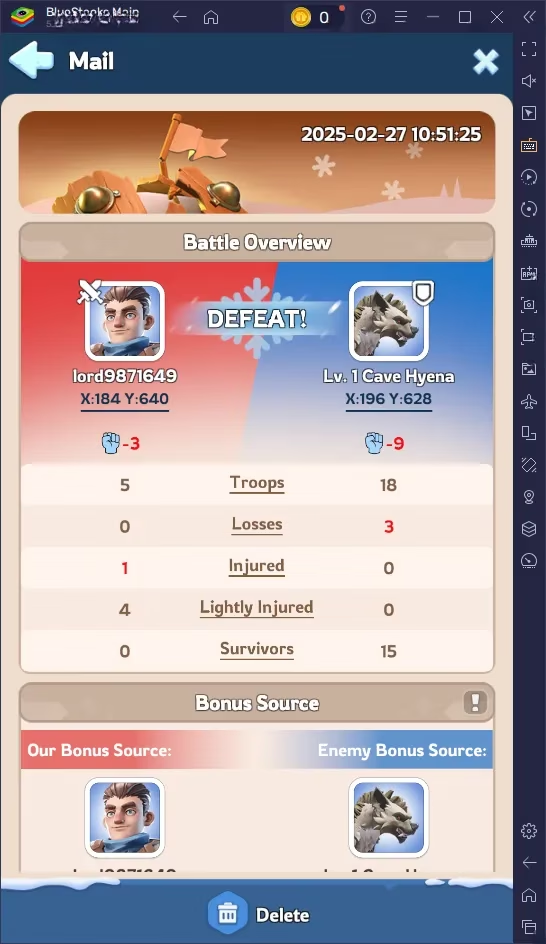
Prevention: The Best Medicine is Not Getting Shot
The absolute best way to deal with troop losses is to avoid them like a telemarketer call during dinner. Some battles are unavoidable, but reckless aggression is the number one cause of premature digital demise.
Your Infirmary is Your Best Friend (Upgrade It!)
Think of your Infirmary not as a hospital, but as a VIP lifeboat on the Titanic. When troops get wounded, they get a ticket to this boat instead of sinking into the icy depths of permanent loss. But here's the catch: this lifeboat has limited seats. If it fills up, any extra wounded soldiers are left to tread water until they... don't. Upgrading your Infirmary is like adding more decks to that lifeboat. It's the single most important investment you can make. A full Infirmary during a big battle is as useful as a chocolate teapot—utterly pointless. Keep it upgraded, and always have the resources ready to heal troops quickly and free up space.

Don't Be a Hero (Unless You're Sure You'll Win)
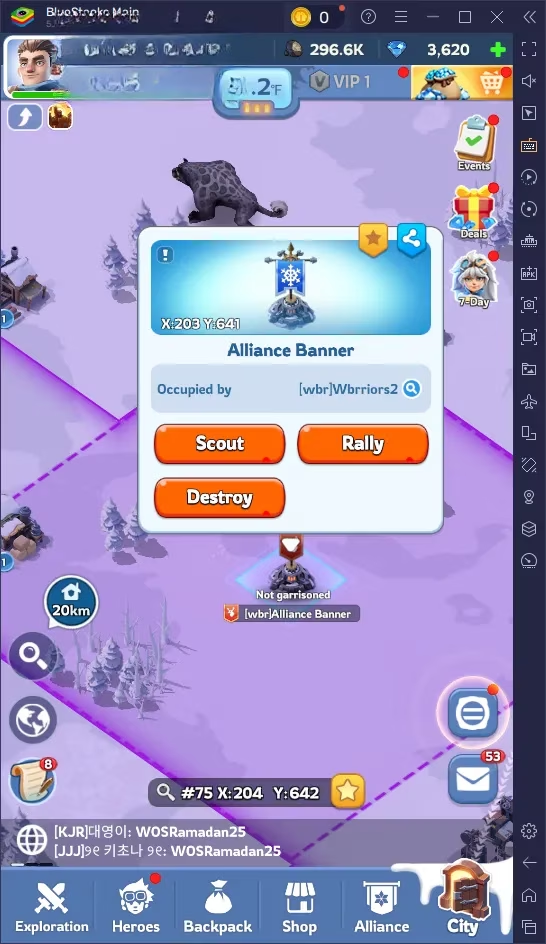
Scouting is not a suggestion; it's a commandment. Attacking a city without scouting is like trying to fix a leaky pipe with a blindfold on—you're just asking for a flood of problems. If the enemy's power bar is glowing brighter than a supernova next to your faint candle, walk away. The potential rewards are not worth the catastrophic losses. Similarly, on defense, know when to fold 'em. If a whale is bearing down on your minnow of a city, activating a peace shield or using a temporary relocation item isn't cowardice—it's advanced tactical intelligence. Fighting a hopeless battle is as strategic as using a feather to stop a freight train.
Peacetime Habits for Wartime Success
Your army's safety isn't just a wartime concern. When you log off, you're essentially leaving your city unattended in a den of wolves.
-
Use Shields: Going offline for a while? Pop a shield. It's the ultimate "Do Not Disturb" sign.
-
Send Them Packing: No shield? March your troops to reinforce a strong ally's city or hide them in a random tile on the world map. An empty barracks can't lose troops.
-
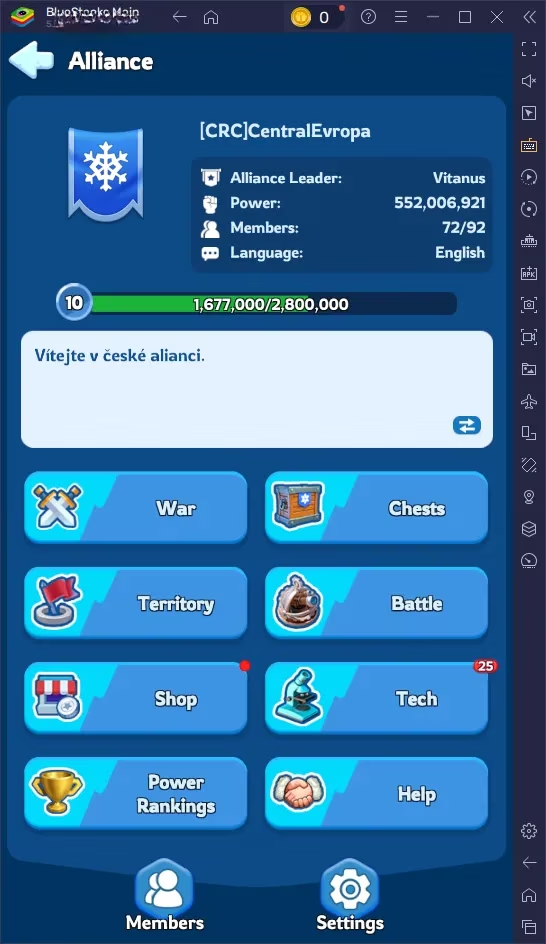
Alliance Armor: A strong, active alliance is like having a neighborhood watch in a post-apocalyptic suburb. They offer protection, advice, and shared defense strategies.
-
Monster Hunting Casualties: Even PvE isn't safe. Hunting monsters on the map will inevitably wound some troops. Treat these excursions like controlled experiments, not all-out wars.
The Healing Arts: Bouncing Back from a Beatdown
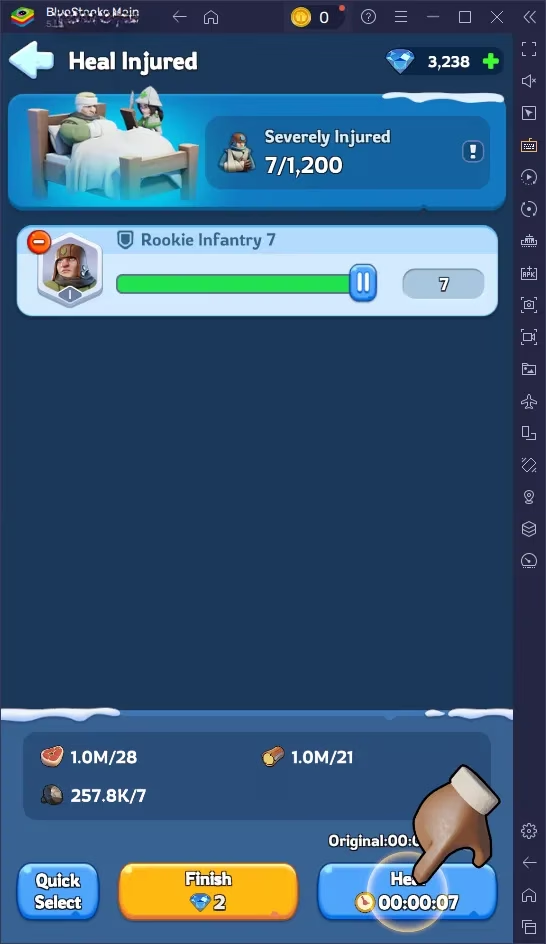
Healing is always, always faster and cheaper than training new troops. Your post-battle priority list should look like this:
-
Heal First, Train Later. Always drain that Infirmary before you queue up new recruits.
-
Resource Management. After a big fight, your resources might look as depleted as my social battery after a family reunion. Budget for healing costs.
-
Prioritize Your Best. Heal your highest-tier troops first. They're your star players; get them back on the field.
-
Use Speed-Ups & Alliance Help. Got healing speed-ups? Use them. Need help reducing healing time? Your alliance is there for a reason. Ask!
The Comeback Kid: Rebuilding After Catastrophe
So, you got hammered. Your army looks like a ghost town. Don't panic. Rebuilding is a science, not a mad rush.
Smart Training:
-
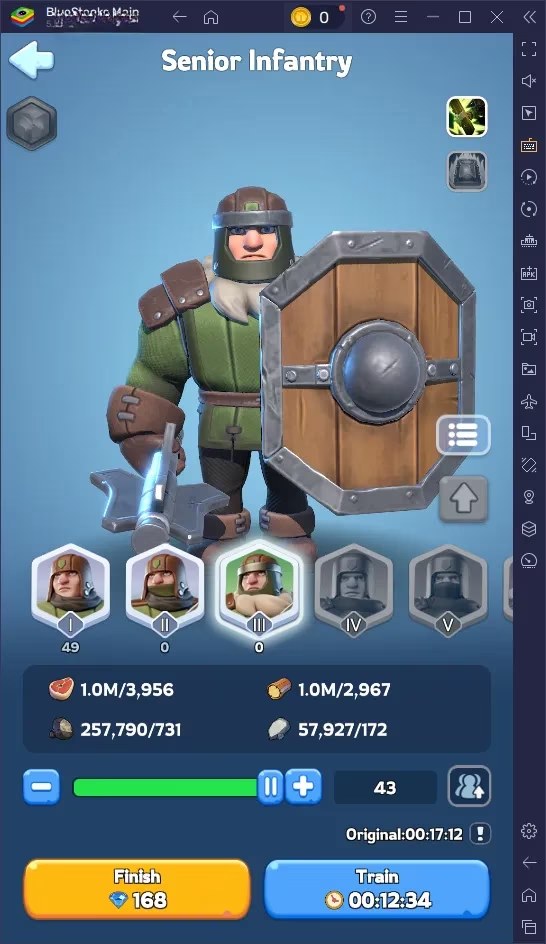
Balance is Key: Don't just spam 10,000 infantry. A balanced army (Infantry, Marksmen, Lancers) is versatile and strong. It's like a good stew—you need all the ingredients.
-
Strategic Speed-Ups: Hoard your training speed-ups for emergencies like this. A well-timed speed-up can cut your recovery time in half.
-
Heal Before You Build: I can't stress this enough. Clear the Infirmary first.
Lean on Your Alliance:
This is what they're for! A good alliance won't leave you to freeze alone.
-
Ask for Reinforcements: Have allies send troops to garrison your city while you rebuild. It's a security blanket made of swords and arrows.
-
Join Rallies: Even with a tiny army, you can still join alliance rallies against monsters or forts. You'll contribute and earn rewards to aid your recovery.
-
Resource Trading: If you're short on food or wood for healing, see if an ally can send some your way.
Long-Term Habits for an Unbreakable Army
Victory isn't about one big win; it's about consistent, smart habits.
-
Infirmary Upgrades: Make it a ritual. New troop tier? Upgrade the Infirmary.
-
Constant Training: Always have a training queue going, even during peace. A steady trickle of replacements is better than a desperate flood.
-
Alliance Activity: Be present. Chat, plan, contribute. It pays dividends in protection and support.
-
Shield Discipline: See a storm of enemy activity on the map? That's your cue to shield up. It's cheaper than rebuilding.
The Final Freeze:
Troop losses in Whiteout Survival are as inevitable as bad puns in a guide like this. But managing them well is the difference between thriving and merely surviving. By treating your Infirmary like a sacred temple, picking your fights with the caution of a bomb disposal expert, and maintaining an army as balanced as a gourmet meal, you can turn setbacks into mere speed bumps. And when disaster does strike, a cool head, a smart rebuild, and the unwavering support of your alliance will have you back in the fight faster than you can say "global warming." Remember, in the frozen wasteland, the strongest survivor isn't the one who never gets hurt—it's the one who knows how to heal.